Correlating App Notification Timing with Spikes in Live Event Sports Betting Volumes Across User Demographics
Written by Harper Friedrich · Jul 27, 2026
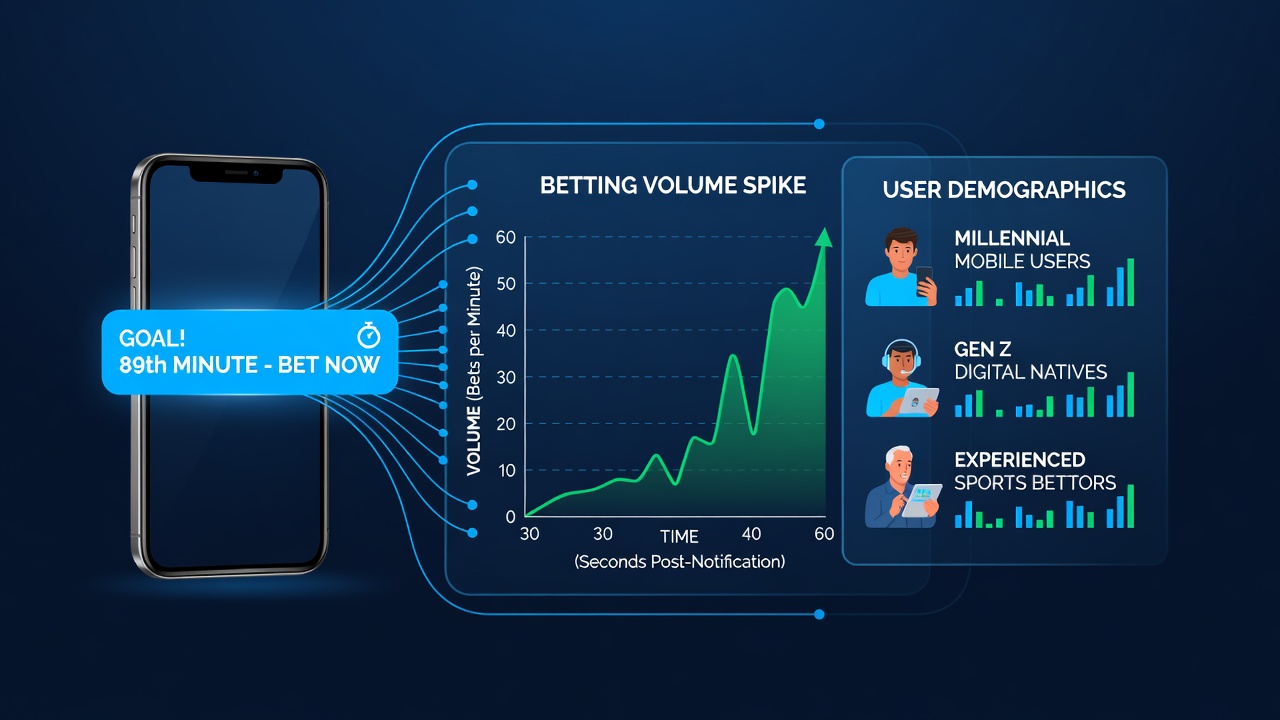
Correlating App Notification Timing with Spikes in Live Event Sports Betting Volumes Across User Demographics
Live event sports betting platforms send push notifications at specific intervals before and during matches, and operators track how those moments align with measurable increases in wager placement across different user groups. Data collected from multiple operators shows distinct patterns where notifications timed within five minutes of a kickoff or pitch change produce volume surges that vary by age bracket, geographic region, and device usage.
Notification Timing Patterns During Live Events
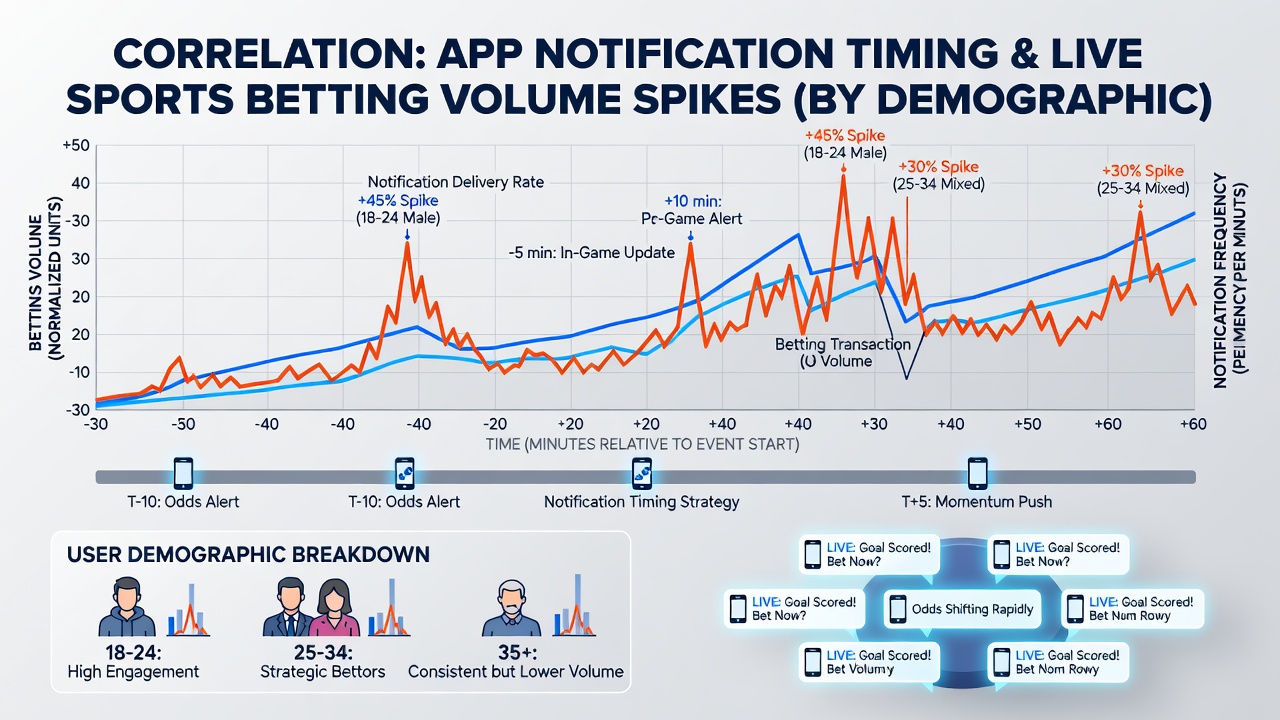
Operators schedule alerts around predictable game milestones such as player substitutions, injury reports, and momentum shifts, and analysts record the resulting bet submissions in real time. A study covering European and North American markets found that alerts sent three to seven minutes before a corner kick or free kick in soccer generated higher activity levels among users aged 25 to 34 compared with those aged 45 and older. The same timing window produced smaller but consistent lifts among users in urban areas who accessed apps on mobile devices during evening hours.
Researchers examined session logs from the first half of 2026 and noted that notifications delivered immediately after a goal or point scored created secondary spikes that lasted longer in markets with higher concentrations of younger users. These secondary increases appeared most pronounced in regions where live betting on basketball and tennis dominates, while football markets showed steadier responses to pre-event reminders.
Demographic Differences in Volume Response
Breakdowns by age reveal that users between 18 and 24 respond more quickly to notifications sent during high-action sequences, whereas users aged 35 to 44 show stronger reactions to alerts that include updated odds or player statistics. Gender splits indicate that male users across most age groups place more bets following notifications tied to goal-scoring opportunities, while female users demonstrate steadier engagement when notifications reference match statistics or team performance summaries.
Regional data from operators operating in Canada and Australia indicate that users in metropolitan areas place higher volumes after notifications that arrive during the second quarter of basketball games or the third set of tennis matches. In contrast, users in suburban and rural locations respond more evenly across all quarters when notifications arrive at the start of each period rather than during play. Device type also correlates wth response speed, with tablet users showing slower but sustained activity compared with smartphone users who react within the first two minutes of an alert.
Observations from July 2026 Data Sets
Records compiled during July 2026 across several major sports seasons show that notifications timed to coincide with halftime intervals produced the largest single-minute volume increases among users aged 25 to 39 in both North American and Australian markets. The same data sets reveal that alerts sent during live tennis matches generated more consistent lifts across all demographics when they referenced serve statistics rather than general match status.
Operators compared notification open rates with subsequent bet placement timestamps and found that users who opened an alert within 30 seconds accounted for the majority of the observed volume increase in basketball and soccer events. Those who opened notifications after 90 seconds contributed smaller incremental volumes that tapered off quickly except in the 45-plus age group, where activity remained elevated for several additional minutes.
Cross-Platform and Regulatory Context
Industry reports from the American Gaming Association and academic analyses conducted at institutions in Canada document similar timing correlations across multiple operators. These sources note that the relationship between notification delivery and betting volume holds across different regulatory environments, though the magnitude of spikes varies according to local rules on promotional messaging frequency.
Platform developers adjust delivery windows based on archived session data that tracks user location, time of day, and previous response patterns. Adjustments made during the summer of 2026 incorporated findings from earlier months and produced measurable differences in volume distribution across demographic segments, particularly among users who had previously opted into event-specific alerts.
Conclusion
Analysis of notification timing against live betting volumes demonstrates consistent correlations that differ by age, location, device, and sport. Records from 2026 show that operators can identify optimal delivery windows for each demographic segment through examination of timestamped session and wager data. Continued collection of these metrics across additional seasons will allow further refinement of timing strategies while remaining within existing regulatory frameworks in each jurisdiction.