Exploring Demographic Variations in Digital Table Game Preferences Across Global Time Zones
Written by Ulrich Neumann · Jun 6, 2026

Exploring Demographic Variations in Digital Table Game Preferences Across Global Time Zones
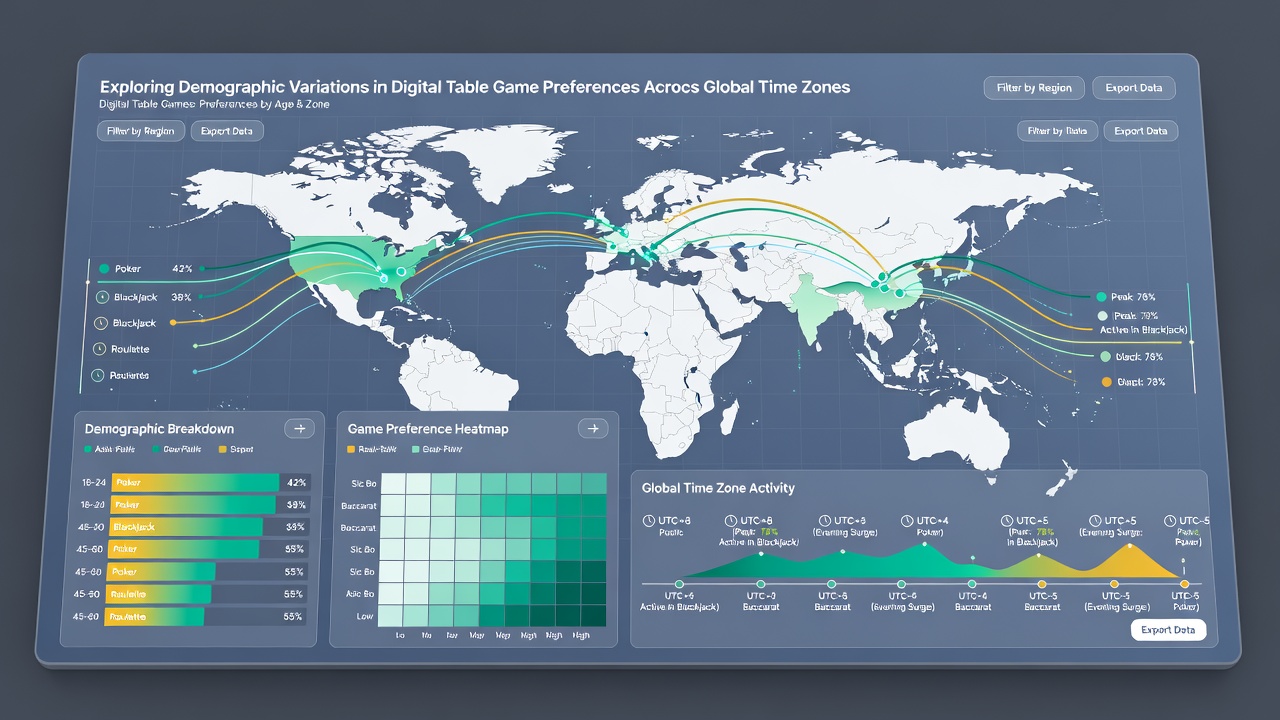
Digital table games continue to expand their reach as online platforms connect players from every continent, and researchers have documented clear patterns in how different groups select blackjack, roulette, baccarat, and poker variants. Data collected through 2025 and into June 2026 reveal that age, gender, income levels, and cultural background shape these choices, while time zones add another layer by shifting peak activity windows and altering the mix of games that see the most traffic at any given hour.
Demographic Patterns in Game Selection
Studies compiled by academic institutions and industry analysts show that players aged 18 to 34 gravitate toward fast-paced variants such as speed blackjack and turbo roulette, whereas those over 45 spend more time on traditional European roulette and multi-hand poker formats. Gender distributions also stand out in platform logs, with male users logging higher volumes in poker rooms and female users showing stronger engagement with baccarat and side-bet heavy blackjack tables. Income brackets further refine these trends, because higher-earning cohorts tend to favor live-dealer tables that carry elevated minimum bets while lower-income segments stick to low-stakes RNG versions during shorter sessions.
Geographic origin introduces cultural preferences that persist even when players access the same global servers. East Asian markets display elevated participation in baccarat, consistent with land-based habits in Macau and Singapore, while North American and European users split more evenly between blackjack and roulette. Observers note that these patterns hold steady across multiple operators, suggesting that demographic variables outweigh platform-specific marketing in many cases.
Time Zone Effects on Play Volume and Choice
Time zones create predictable surges and lulls that interact with demographic rhythms. When it is evening in the Asia-Pacific region, platforms register heavier baccarat traffic from younger mobile users, whereas the same universal time corresponds to early morning in Europe and produces lighter overall volume dominated by desktop poker sessions from older players. North American evening hours, which overlap with late night in parts of Asia, draw mixed crowds that split between speed variants and classic table offerings depending on the age cohort logging in.
Platform operators have adjusted server-side features in response, including time-zone-specific promotions that appear only during regional peak windows. June 2026 records indicate that these targeted campaigns lift session lengths by measurable margins among the 25-to-40 age group without affecting older segments to the same degree. The data also show that players who cross multiple time zones through travel or shift work often maintain their home-region game preferences rather than adopting local norms.
Regional Data Sources and Comparative Figures
Government and academic reports supply the quantitative backbone for these observations. A longitudinal study released by the University of Nevada, Las Vegas International Gaming Institute tracks session metadata across six continents and confirms that demographic clusters remain stable even when time-zone activity peaks shift by several hours. In parallel, the Australian Institute of Criminology has published aggregated figures on digital table game participation that highlight similar age and gender splits within Oceania markets.
Canadian provincial regulators contribute additional granularity through quarterly reports that break down table game traffic by self-reported postal code and device type. These datasets reveal that urban centers with high concentrations of young professionals exhibit sharper evening spikes in mobile blackjack, while rural areas show steadier daytime roulette activity from older desktop users. European research consortia have begun cross-referencing similar logs with census demographics, and early results align with the patterns documented in North America and Asia-Pacific regions.
Platform Adjustments and Future Tracking
Operators respond to these documented variations by refining recommendation engines and lobby layouts according to the time of day and the inferred location of each login. Some have introduced optional demographic filters that let users see only the game types most popular within their age or region cohort, although adoption rates vary. Researchers continue to monitor whether these customizations reinforce existing preferences or gradually broaden them over repeated sessions.
June 2026 marks an inflection point because several major platforms completed upgrades to their analytics dashboards, allowing finer segmentation by both demographic tags and time-zone metadata. The resulting datasets should support more precise modeling of how cultural background, age, and circadian rhythms intersect during overlapping global play windows. Continued collection of anonymized logs remains essential for verifying whether these patterns evolve with new game releases or regulatory changes in key jurisdictions.
Conclusion
The intersection of demographics and time zones produces measurable differences in which digital table games attract the most play at any moment. Age and gender consistently predict variant preferences, cultural background anchors regional favorites, adn time-zone offsets shift volume peaks without erasing those underlying patterns. Ongoing data collection through mid-2026 and beyond will determine whether these relationships remain stable or adjust as platforms introduce new formats and as player bases continue to diversify.