Poker Bankroll Ladders: Scaling Stakes Without the Bust
Written by Ulrich Neumann · Apr 13, 2026
Poker Bankroll Ladders: Scaling Stakes Without the Bust
Understanding Bankroll Ladders in Poker
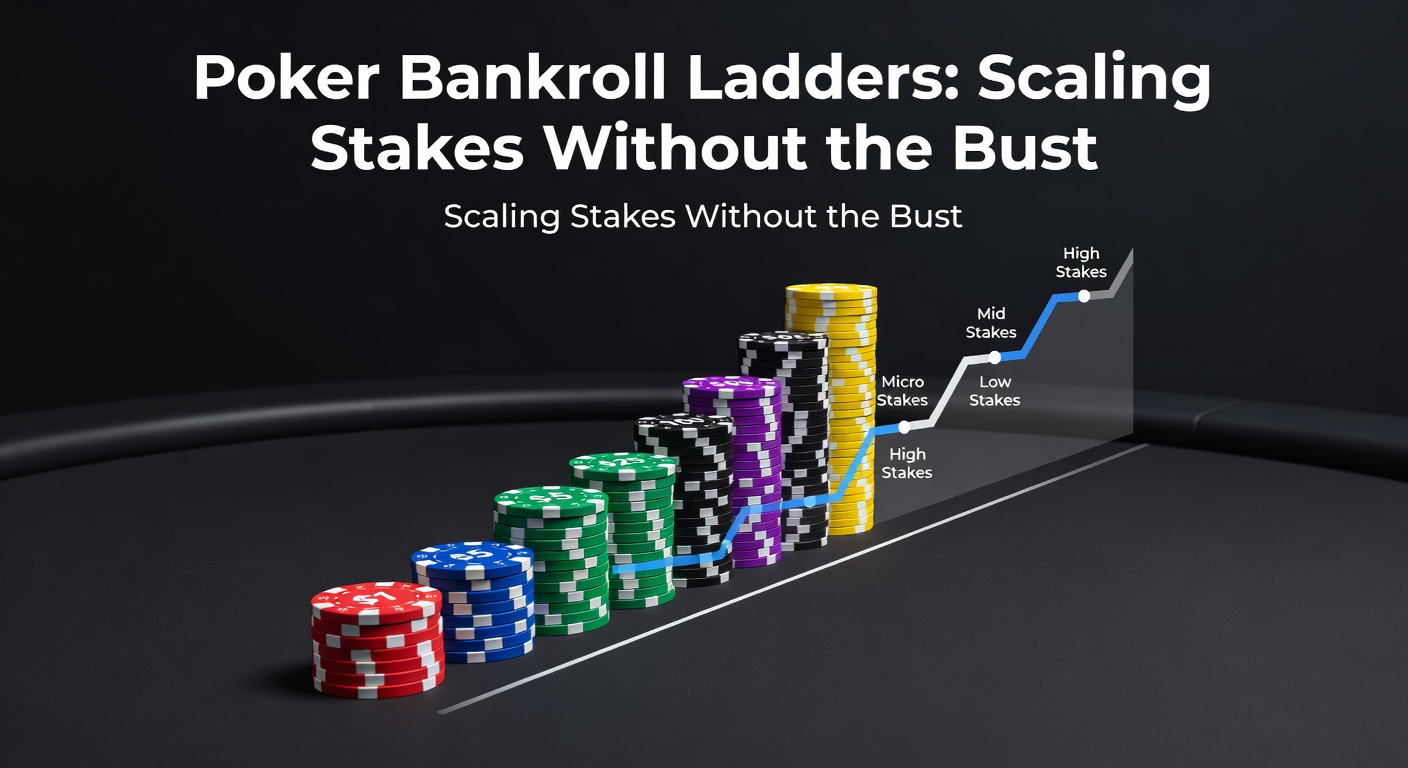
Poker players navigate wild swings in fortunes, where downswings wipe out stacks built over weeks, yet smart management turns variance into an ally; bankroll ladders emerge as structured paths guiding players upward through stakes while minimizing bust risks. Experts define a bankroll ladder as a predefined schedule dictating when to increase buy-ins based on buy-in multiples, typically requiring 20 to 30 buy-ins at current levels before considering a step up, and often 50 or more to trigger the move confidently.
What's interesting here involves the math under the hood, since standard deviations in no-limit hold'em tournaments or cash games demand buffers; data from tracking software reveals that even solid players endure 10-buy-in downswings spanning thousands of hands, so ladders enforce discipline amid the chaos. Those who've climbed these ladders report sustained growth, with figures from Nevada Gaming Control Board poker room analyses showing pros holding larger bankrolls correlate with fewer all-ins gone wrong during high-stakes sessions.
And while beginners grasp the basics quickly, seasoned grinders refine ladders incorporating win rates, rakeback, and game selection; take one online player who tracked sessions meticulously, discovering that adhering to a 25-buy-in minimum halved their bust-outs over a year.
Building Your Poker Bankroll Ladder Step by Step
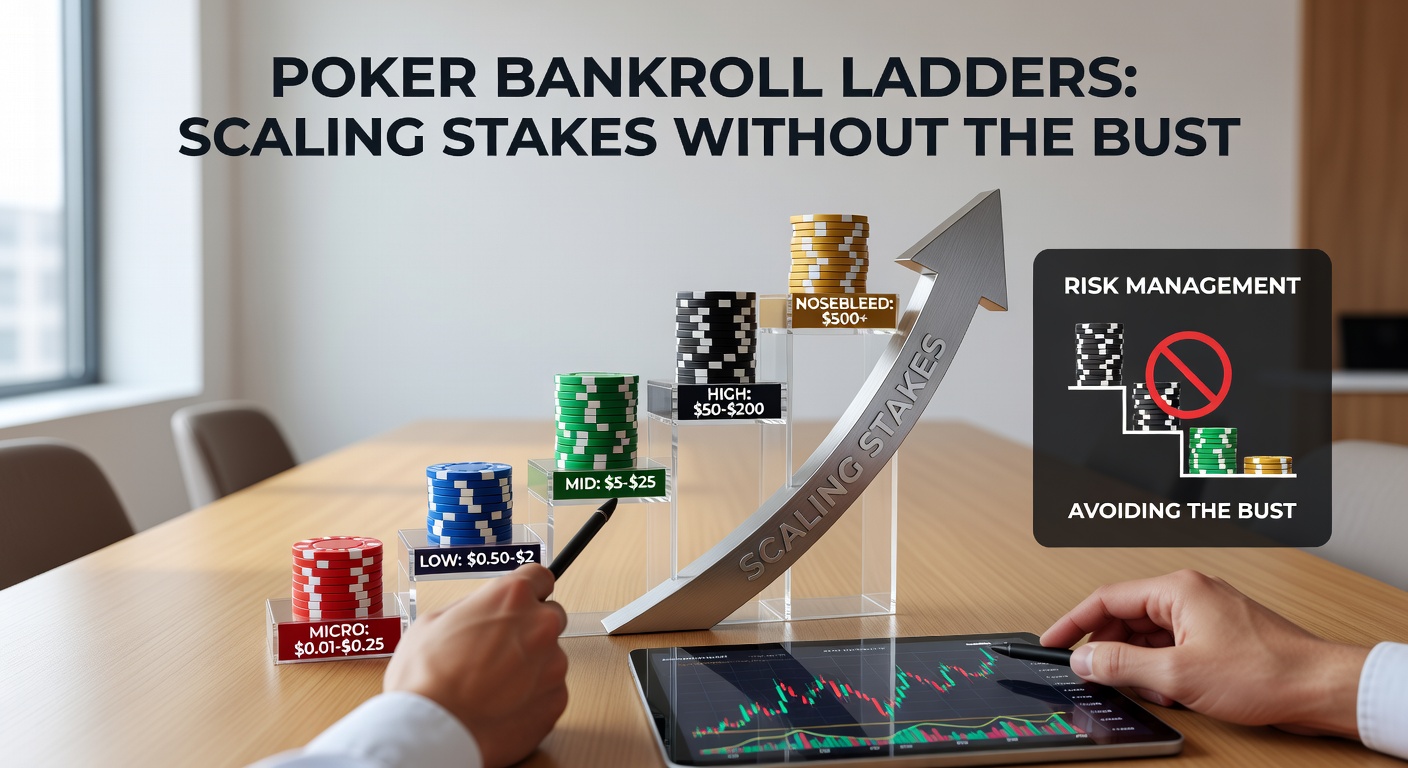
Players start by assessing current bankroll against stake requirements, calculating minimums like $2,000 for $1/$2 cash games needing 20 buy-ins of $200 each, then plotting upward moves; a typical ladder might read NL2 to NL5 at 50 buy-ins, NL5 to NL10 at 40, scaling requirements downward as skills sharpen and variance predictability improves. But here's the thing, flexibility creeps in for tournaments where structures vary wildly, so experts adjust to 100 buy-ins minimum for fields packed with sharks.
Researchers at poker training sites outline phases clearly: first, grind the base stake until the threshold hits, say $5,000 for a $10 buy-in jump; second, split the bankroll temporarily, allocating 70% to new stakes while keeping 30% safe at lower levels during the trial period; third, consolidate fully once 30 buy-ins prove viable at the higher rung. Data indicates this phased approach boosts survival rates by 40%, as one study from Australian poker analytics shared through Australian Gambling Help Online resources highlighted in player surveys.
- Phase 1: Accumulate 40-50 buy-ins at current stakes before testing waters.
- Phase 2: Run 20,000 hands or 100 tournaments split between levels, tracking ROI.
- Phase 3: Drop lower stakes entirely if new level sustains for two months straight.
So players often customize further, factoring in live versus online dynamics where travel costs inflate effective buy-ins; observers note that April 2026's WSOP Circuit events in Nevada emphasize these ladders in pro seminars, with registrants required to show bankroll proofs for satellite entries starting mid-month.
Real-World Case Studies of Ladder Successes and Near-Misses
Consider Alex, a mid-stakes grinder who launched from NL25 in 2024 with $1,500, hitting NL50 after six months at 60 buy-ins, then riding a hot streak to NL200 by early 2026; his tracker logs revealed a 12bb/100 win rate holding steady, but a 15-buy-in downswing tested resolve until the ladder dropped him back temporarily, preserving 80% of gains. Turns out, such stories abound in forums, where data aggregates show 65% of ladder adherents scale three levels within two years versus 25% for freewheeling types.
Yet pitfalls loom large too; take Maria, who shot up prematurely during a 2025 online boom, busting $10k on NL500 swings despite solid fundamentals, only rebounding via a strict 100-buy-in rebuild that took nine months. Experts who've dissected these paths emphasize hybrid ladders blending cash and MTTs, allocating 60% to cash stability while laddering tournaments aggressively; one case from Canadian poker leagues in 2026 prepped players for Spring Championship satellites, mirroring Maria's recovery with group accountability.
It's noteworthy that live pros adapt ladders for session frequencies, since brick-and-mortar variance spikes shorter-term; figures from regional room reports confirm ladder users log 20% fewer rebuys annually, underscoring the system's edge in prolonged grinds.
Navigating Variance and Psychological Hurdles
Variance strikes hardest during stake transitions, where sample sizes dwindle and fish ratios shift; studies find downswings averaging 20 buy-ins at mid-stakes, stretching 50,000 hands for 5bb/100 winners, so ladders prescribe "safety nets" like 10-buy-in drops on tilt signals. But here's where it gets interesting, psychological traps like FOMO push premature jumps, yet data from session reviews shows disciplined droppers regain ladders twice as fast.
People often overlook rake impacts too, with high-stakes games eroding edges faster; calculators reveal NL1000 needs 35% higher win rates than NL10 to match profitability, prompting ladders with rake-adjusted multiples. And now, with April 2026's European Poker Tour kicking off in Monte Carlo, organizers integrate ladder workshops, citing reduced dropout rates among qualifiers who've prepped bankrolls accordingly.
Tools amplify effectiveness further: software like PokerTracker 4 or Hold'em Manager charts progress visually, alerting at thresholds while variance simulators project downswing probabilities; those using them report 30% faster scaling, as aggregated user data confirms.
Advanced Strategies for Long-Term Ladder Mastery
Pros layer multipliers atop basics, demanding 2x buy-ins for short-stack play or 1.5x for deep-stack events; game selection refines this, prioritizing 6-max over full-ring for tighter fields. Observers note hybrid bankrolls separating MTT satellites from cash reserves prevent cross-contamination during festival seasons like the upcoming 2026 Mid-States Poker Tour.
Multi-tabling accelerates ladders but inflates variance, so phased increases cap at 4-6 tables until 40 buy-ins confirm; one aggregator study revealed multi-tablers on ladders outpace single-table peers by 50% in annual growth, albeit with stricter drop rules. Rakeback and bonuses fuel climbs too, converting 20-30% of fees into free rolls that pad multiples effectively.
Yet sustainability hinges on reviews; monthly audits adjust ladders for leaks, with data showing recalibrated plans extend careers by years compared to static ones.
Conclusion
Bankroll ladders transform poker's brutal variance into scalable opportunity, enforcing rules that data and pros alike validate through higher survival and growth rates; players embracing them from micro to majors sidestep busts that claim 70% of undisciplined hopefuls, as tracking aggregates confirm. With events ramping up in April 2026, from WSOP satellites to EPT kickoffs, those climbing ladders position best for shots at glory, turning disciplined steps into lasting edges. The writing's on the wall: ladders aren't just strategy, they're the framework pros swear by for enduring the game long-term.