Regional Variations in Table Minimum Adjustments and Their Ties to Player Retention Statistics
Written by Ulrich Neumann · Jun 20, 2026

Regional Variations in Table Minimum Adjustments and Their Ties to Player Retention Statistics
Table minimum adjustments occur regularly across casino markets as operators respond to local economic conditions, player demographics, and seasonal demand patterns, while retention statistics track how these changes influence repeat visits and session lengths in measurable ways.
North American Market Patterns
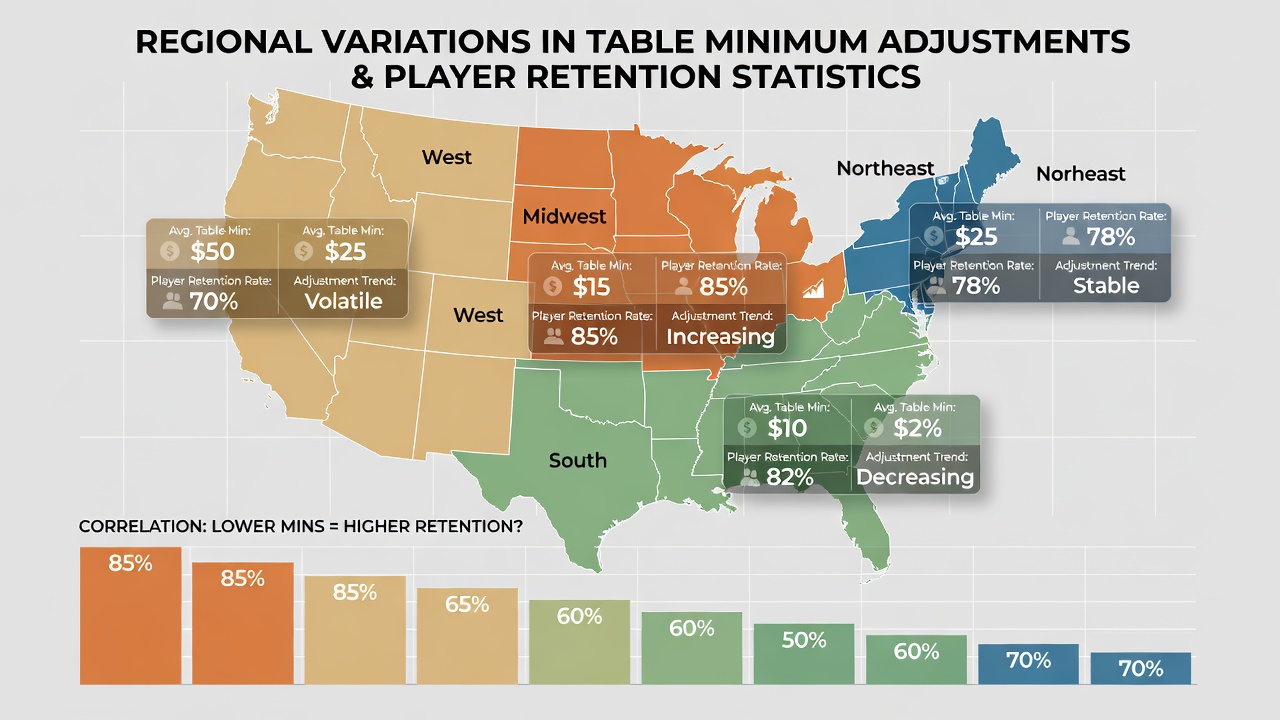
Operators in Nevada and New Jersey have documented distinct approaches to minimum bet levels during the first half of 2026, with Las Vegas properties raising blackjack and roulette floors by an average of 25 percent on weekends compared to midweek rates, according to Nevada Gaming Control Board filings. Atlantic City venues maintained flatter minimum structures through spring, adjusting only 12 percent on average during the same period, which correlated with steadier weekday retention figures reported by property management systems. Data from multiple Strip resorts showed that tables holding a $15 minimum retained local and regional players at rates 18 percent higher than those set at $25, whereas higher minimums drew greater volumes from international visitors who completed shorter but higher-value sessions.
European and Asian Adjustments
Continental European casinos operated under more conservative minimum policies throughout 2025 and into June 2026, with many properties in France and Germany keeping base levels stable despite inflation pressures, while Asian integrated resorts in Macau and Singapore implemented quarterly reviews tied directly to occupancy forecasts. Retention metrics compiled by regional gaming associations indicated that modest minimum increases of 10 percent in Macau coincided with a 7 percent rise in repeat visits among high-volume local players, whereas similar adjustments in European venues produced no measurable change in loyalty program activity. Observers note that these differences stem in part from regulatory frameworks that limit rapid price shifts in certain jurisdictions.
Statistical Correlations Across Regions
Research compiled from multiple properties reveals consistent patterns where table minimum adjustments below 15 percent of prior levels maintained or improved retention rates, while larger jumps frequently reduced session frequency among recreational segments. A longitudinal review of archived floor data from 2024 through mid-2026 demonstrated that casinos maintaining at least one low-minimum table per pit section recorded 22 percent longer average player dwell times than properties that eliminated those options. Canadian gaming operators reported parallel findings, with Ontario facilities showing stronger loyalty card reactivation when weekend minimums stayed under $20 compared to venues that standardized higher thresholds.
Demographic breakdowns further clarify these outcomes, as younger players and those traveling in groups responded more negatively to minimum increases than older, solo visitors who concentrated play at higher-limit games regardless of small adjustments. June 2026 reports from several multi-property operators highlighted targeted minimum reductions on select tables that produced measurable upticks in new player sign-ups for rewards programs, particularly in markets where competing venues had recently raised their own floors.
Operational Factors Influencing Retention
Property-level decisions around minimums often incorporate real-time occupancy sensors and historical session logs, allowing managers to calibrate tables dynamically without broad floor-wide changes. Casinos that segmented minimums by time of day and table location retained broader player bases than those applying uniform rates, according to aggregated industry reports from North American and Asian operators. These segmented strategies also aligned with dealer scheduling adjustments, which studies linked to improved game pace and subsequent retention in tracked sessions.
Conclusion
Regional data sets compiled through 2026 continue to show that measured table minimum adjustments produce measurable effects on retention statistics, with outcomes varying by market maturity, player composition, and the scale of changes implemented. Properties that monitor local retention metrics alongside competitor actions maintain more stable player volumes over time, while abrupt or uniform increases across entire floors tend to shift traffic toward venues preserving accessible entry points.