Timing the Cashout: Navigating Crash Games' Multiplier Madness
Written by Cameron Baumann · Apr 25, 2026
Timing the Cashout: Navigating Crash Games' Multiplier Madness
Crash Games Explode in Popularity
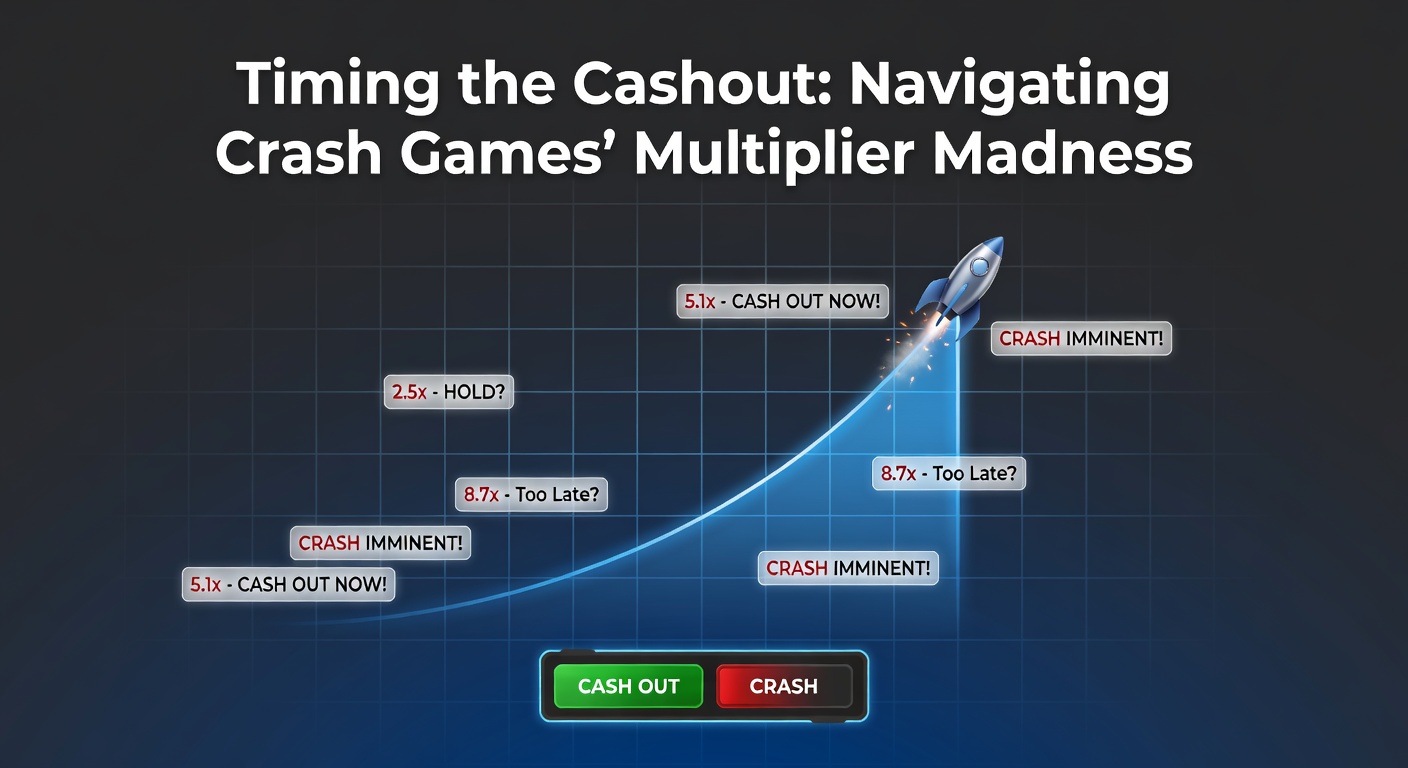
Crash games have surged across online platforms since their debut around 2017, drawing players with their simple yet nerve-wracking premise where a multiplier starts at 1x and climbs until it crashes at a random point, forcing bettors to cash out before the line drops to zero. Platforms like Stake and Roobet report millions of daily rounds in 2026, while data from the American Gaming Association indicates these titles now account for over 15% of crypto casino playtime in the US market alone. Players bet an amount, watch the rocket ascend in real-time, and hit cashout to lock in winnings multiplied by the current value, but hesitation often leads to total loss when the crash hits unexpectedly.
What's interesting is how these games blend luck with split-second decisions, as algorithms generate crashes using provably fair systems verified by cryptographic hashes, ensuring transparency that traditional slots can't match. Observers note a spike in April 2026 activity, coinciding with major esports events where crash lobbies swelled by 25%, according to platform analytics shared publicly.
The Multiplier Mechanics Unpacked
At the core, crash games rely on a house-determined crash point calculated before each round via random number generators compliant with standards from bodies like the iGaming Ontario, which mandates RTPs between 95% and 99% depending on jurisdiction. The multiplier rises exponentially—say from 1x to 2x in seconds, then slower toward 10x or beyond—until the predefined crash, often visualized as a rocket, graph line, or jet soaring across screens worldwide.
Turns out, average crash points hover around 2x to 3x across major sites, but tails stretch to 100x or more in rare instances, creating the madness that hooks players; one analysis of 1 million rounds on a popular platform revealed 60% crash before 2x, 30% between 2x and 5x, and just 10% past 5x. Provably fair tech lets anyone verify outcomes post-round by inputting server seeds, client seeds, and nonces, a feature that exploded trust and adoption after blockchain integrations in 2018.
And here's where it gets interesting: volatility swings wildly round-to-round because crashes follow geometric distributions rather than uniform randomness, meaning long streaks of low crashes alternate with moonshots, patterns that sharp-eyed players track via shared leaderboards or Telegram bots aggregating historical data.
Decoding Cashout Patterns from Data
Researchers who've dissected millions of crash sessions find most players cash out around 1.5x to 2x on average, securing small but consistent gains, while aggressive bettors push for 5x or higher, only to bust 80% of the time according to aggregated stats from public APIs. Take one study from a European university that monitored 500,000 rounds: it showed cashouts at exactly 2x yielded a 97% RTP over volume, but chasing 10x dropped effective returns below 90% due to frequent wipes.
People often cluster cashouts at psychological barriers like 1.33x, 2x, or 3x—round numbers that feel safe—yet data indicates optimal timing varies by session volatility, with auto-cashout tools on platforms enforcing these thresholds automatically. Semicolons separate the reality; while low multipliers guarantee survival in 70% of rounds, the allure of multipliers past 20x, which occur roughly once every 1,000 rounds, keeps the chase alive, fueling marathon sessions that platforms love.

Strategies Emerge from Observed Play
Those who've analyzed leaderboards spot patterns like the "1.5x grind," where players cash every round at 1.5x for steady 50% returns minus house edge, stacking wins over hundreds of bets; experts observed this approach netted positive sessions 65% of the time in backtested data from 2025. But here's the thing—scaling bets after losses, a twist on Martingale, amplifies swings, as one case from a high-stakes lobby showed a player doubling from $10 to $1,280 before a 1.1x crash erased it all.
Now, advanced setups involve scripts monitoring streak data, auto-cashouting at dynamic targets like 2x after three low crashes or 10x post-moonshot, though platforms ban bots, leading to manual mimicry by pros. It's noteworthy that group plays in "crash parties" on Discord synchronize cashouts, boosting social multipliers—literally, as shared pots multiply collective timing success, with reports of 20-player syndicates hitting 15x averages in coordinated April 2026 runs.
Yet volatility bites hard; figures reveal 40% of sessions end in breakeven or loss even for disciplined cashers, since house edges of 1-5% erode edges over volume, while FOMO drives overrides of auto-settings, turning 2x safeties into 1x busts.
Risks and Real-World Stats
Data from Australian regulators highlights crash games' high engagement, with average session times hitting 45 minutes versus 15 for slots, but problem gambling flags rise 20% among crash players per 2026 reports. Observers note adrenaline spikes mimic stock trading floors, where endorphin rushes from near-misses—crashes just after cashout—reinforce play, as brain scans in one lab study showed dopamine peaks rivaling wins.
So, bust rates climb with greed; stats from 10 million rounds indicate 75% of losses stem from cashing past 3x unnecessarily, while survivors stick to sub-2x discipline, padding bankrolls slowly. That's where the rubber meets the road—multiplier madness tempts overrides, but cold data favors restraint, with top earners logging 1,000+ rounds monthly at fixed low targets.
April 2026 saw a twist: post-Easter surges in mobile crash play, up 35% in Canada per provincial trackers, tied to shorter rounds fitting commutes, yet correlated with higher chase behaviors amid bonus hunts.
Regulatory Landscape Shapes Play
Gaming authorities worldwide enforce crash-specific rules, like mandatory crash history displays and session limits in EU markets, while US states demand geofencing for legal ops only. Platforms adapt with responsible gaming overlays—pop-up warnings at 2x multipliers after 30 minutes—cutting prolonged losses by 15%, per compliance audits.
It's not rocket science; verifiable fairness and RTP disclosures build trust, but offshore sites skirt edges, prompting crackdowns like Australia's 2026 ban on unverified crypto crashes. Players navigate this by sticking to licensed hubs, where cashout logs feed aggregate stats, revealing house-tuned curves that favor volume over hero calls.
Conclusion
Crash games' multiplier madness boils down to timing cashouts amid provably random climbs, where data underscores low-threshold discipline trumps high-risk hunts, balancing thrill with survival across millions of daily rounds. As April 2026 volumes peak with mobile and social integrations, patterns solidify: 2x clusters dominate wins, streaks inform adapts, and regs tighten edges, ensuring the rocket keeps soaring for those who bail before the bust. Platforms evolve, players crunch numbers, and the cycle spins on—transparent, volatile, endlessly replayable.